For this post, I chose this cartoon about a dog in talk therapy to present an example of a theory. In this panel, the dog contemplates while laying down in a long couch, representing a therapy session in action. Next, the caption explains that the dog’s ponders over whether they are a good or bad dog. Here, the dog presents a theory that understands a dog can be either a good dog who does bad things sometimes or a bad dog who does good sometimes. By sitting the dog in the therapy chair, this comic implies that the space is intended to allow the dog laying down to develop a deeper understanding of himself.
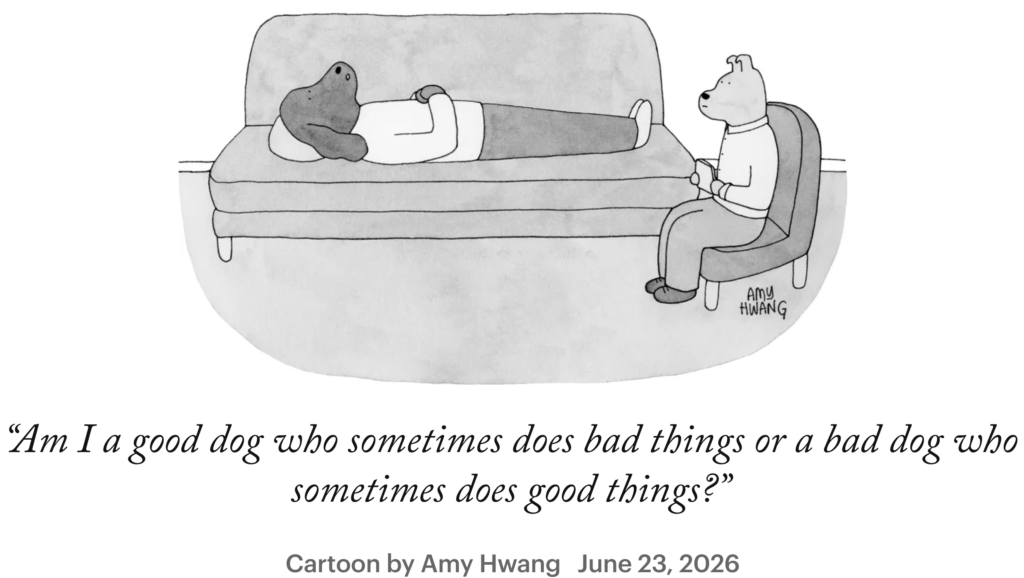
When I first read this chapter, I did not realize that theories are proposed and tested all the time in many facets of my life. Like the dog in the cartoon, I relate to the dog’s absolute thinking to my absolute thinking when I stress over whether I am a good applicant because I have professional experience or a bad applicant because I don’t have research experience for graduate school. To manage this absolute thinking, I learned to practice reframing by asking myself, “Is there any evidence to support the idea that if you are not one thing, that automatically makes you the other?”

This entry is licensed under a Creative Commons Attribution-NonCommercial-ShareAlike 4.0 International license.

